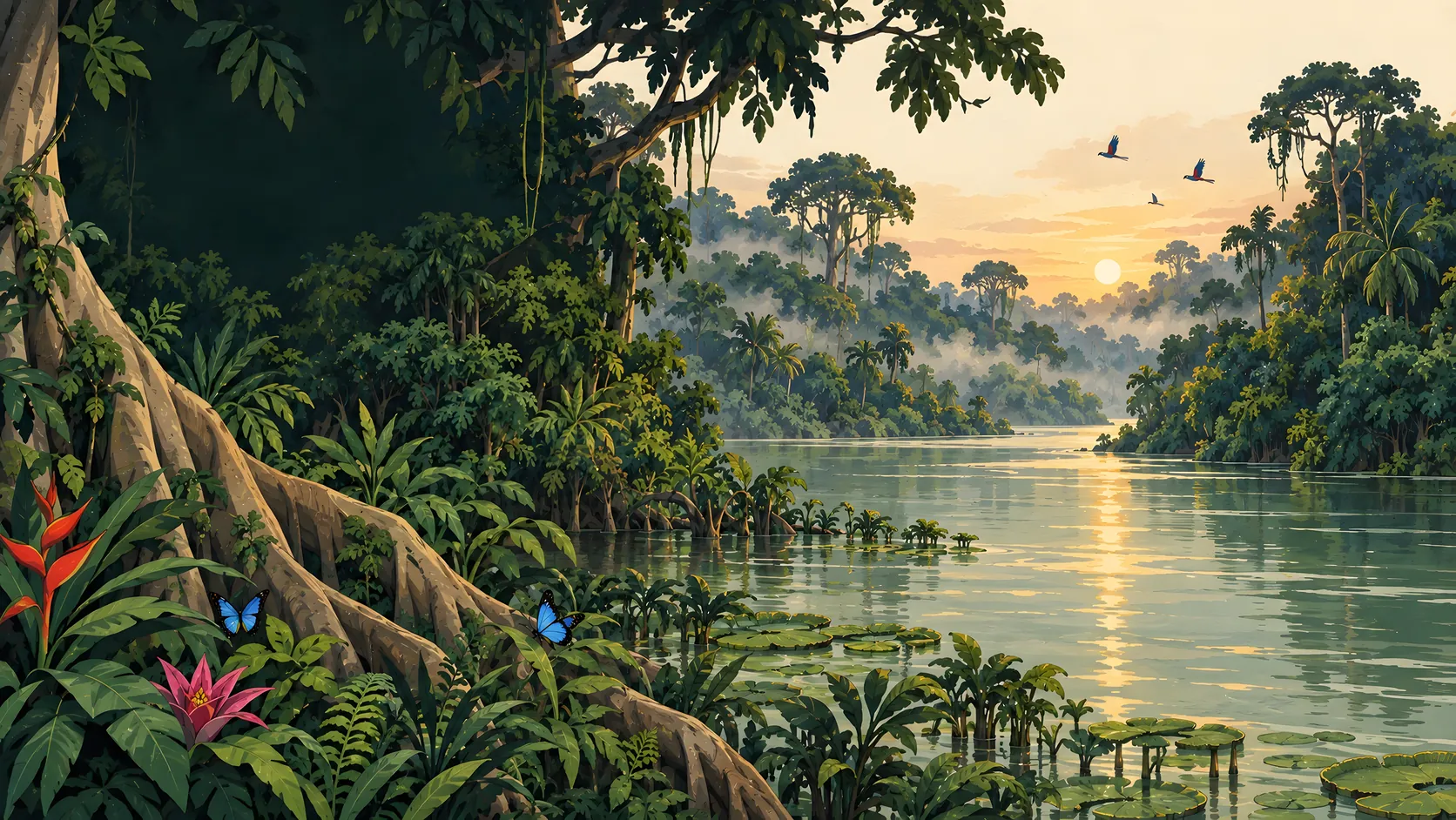
Come in by water.
The canopy closes over the river and the light turns green. For a second the forest seems to wait. Then a bird calls, something moves in the leaves, and you understand that you are the quiet thing here.
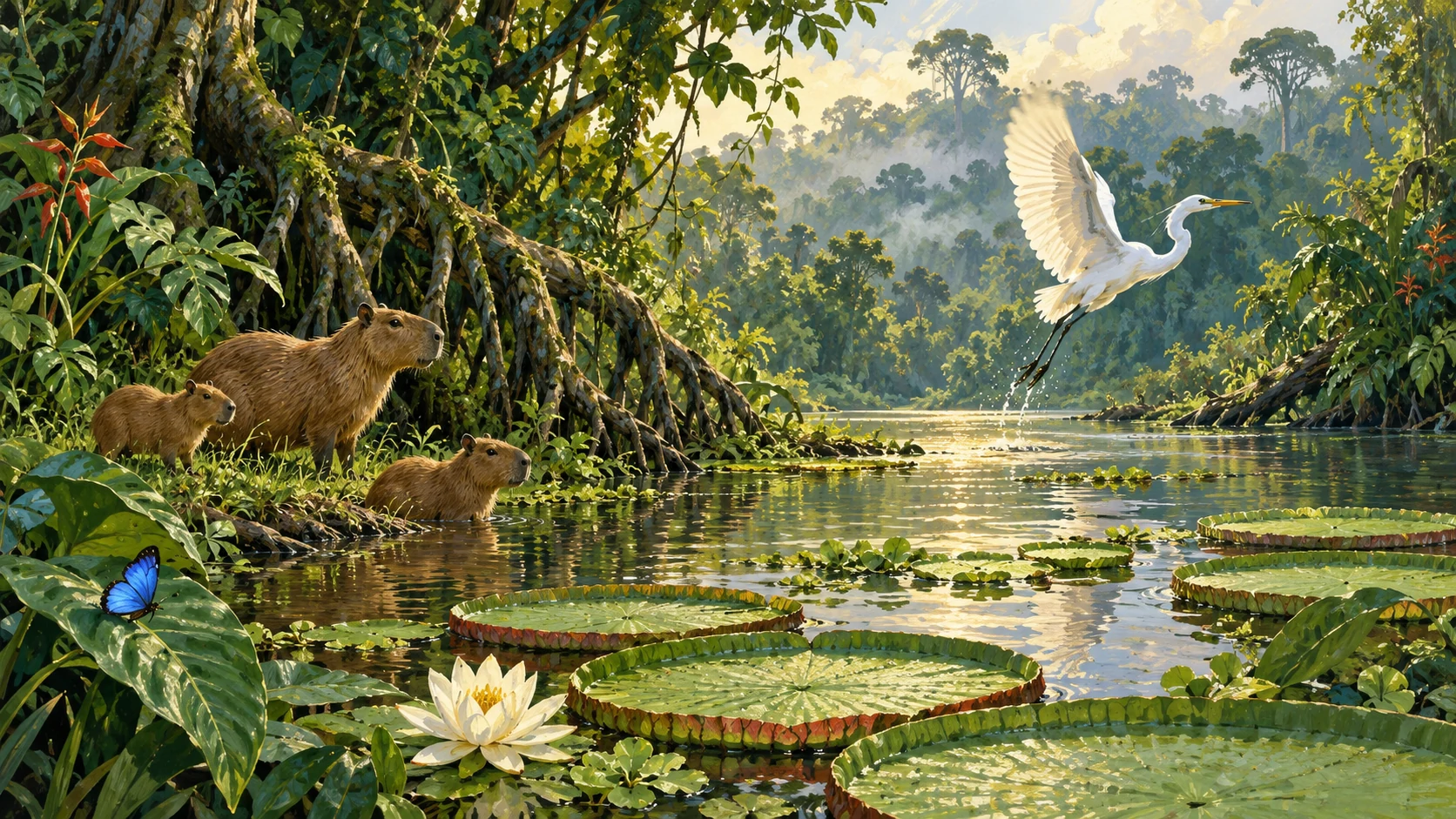
A rainforest is stacked, not flat. Close to the ground, the leaves above take most of the sun, so the floor stays dim. Higher in the trees, other plants live out on the branches, in light the ground never gets. Each height is a different home.
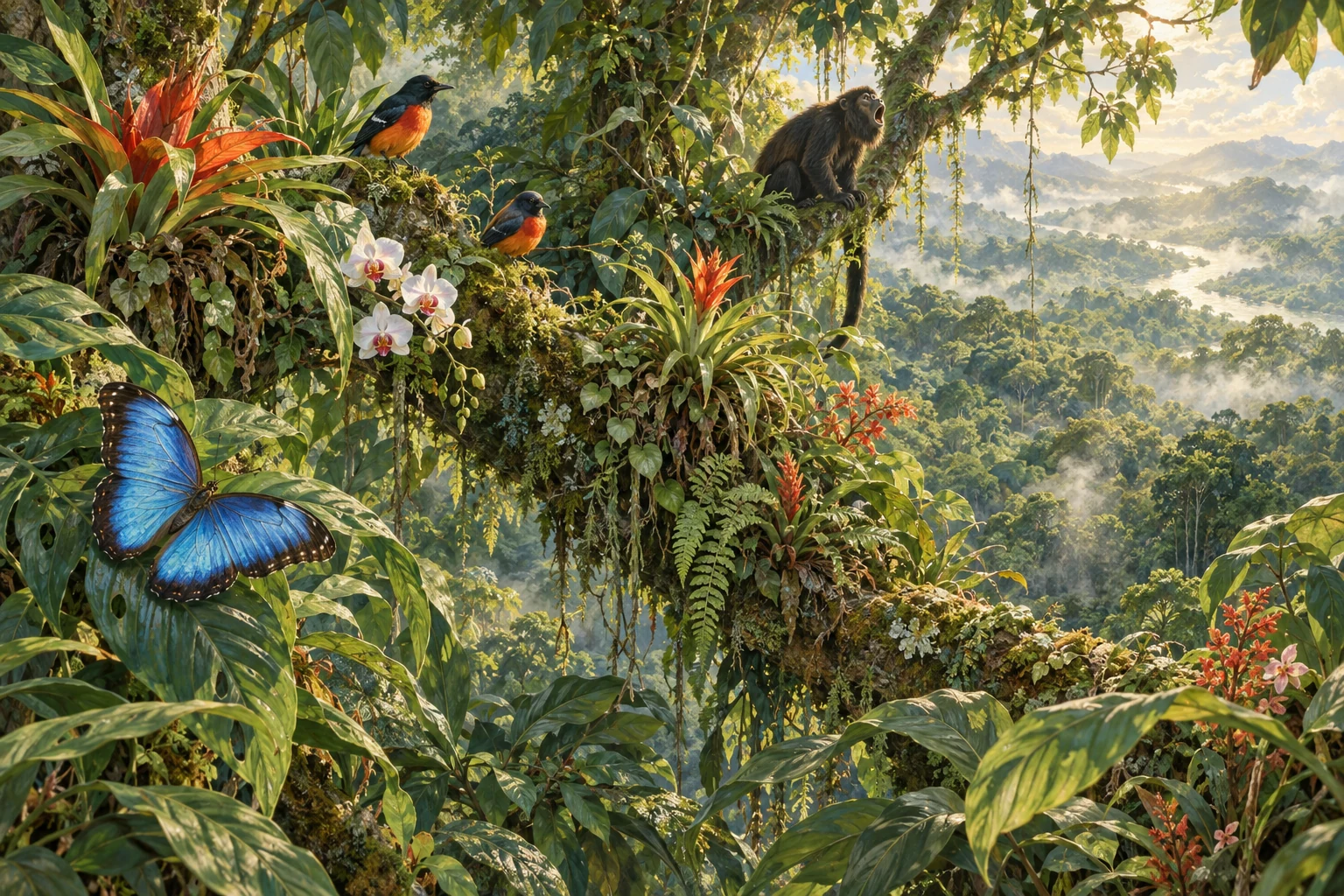
The trees also make weather. They send water back into the air, and that water falls again as rain. Their growth holds carbon. Together, these living exchanges cool the land. A change here can reach people far from the river.
The forest's part in moisture recycling, carbon storage and cooling is described by Flores and colleagues, Nature (2024).
Seen this way, one tree is a home and a piece of the weather at the same time. It is holding up more than itself.
It is somebody's home.
The Amazon is home to peoples with their own languages, their own law and their own way of knowing the forest. They are the ones who have kept it standing. Their rights sit at the centre of its future.
That is not only a feeling. A study compared nineteen Apurinã territories in Amazonas, Brazil, from 2001 to 2021, with an estimate of the loss those lands would have faced without their governance. It found substantially less deforestation there.
The study is about those territories. It is not a claim about the whole Amazon, and it does not say the forest was untouched. The lesson is narrower, and it matters: listen to the people who live with the forest.
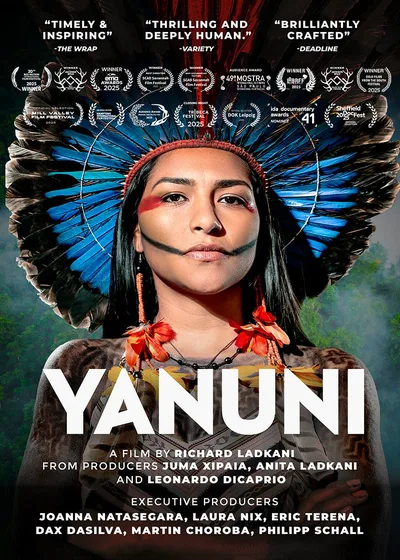
YANUNI, directed by Richard Ladkani, follows Juma Xipaia, a young Indigenous leader in the Brazilian Amazon, through the fight for her people's territory. She is also one of the film's producers.
It is a film about love, family and fury, and about what it costs to stand up to the people who want that land. If you watch one thing from this page, watch this.
YANUNI at its producers, Malaika Pictures. The film is set in Brazil. Junglekeepers, below, works in Peru.
The pressures arrive together.
Forest loss, heat, drought and fire feed each other. A forest that loses its moisture burns more easily, and a burned forest makes less rain. Scientists warn that if these pressures keep stacking, parts of the Amazon can stop being rainforest.
Nature's review of critical transitions in the Amazon forest system lays out the risks and what remains uncertain. There is no single countdown. There are many forests, under pressure in different ways.
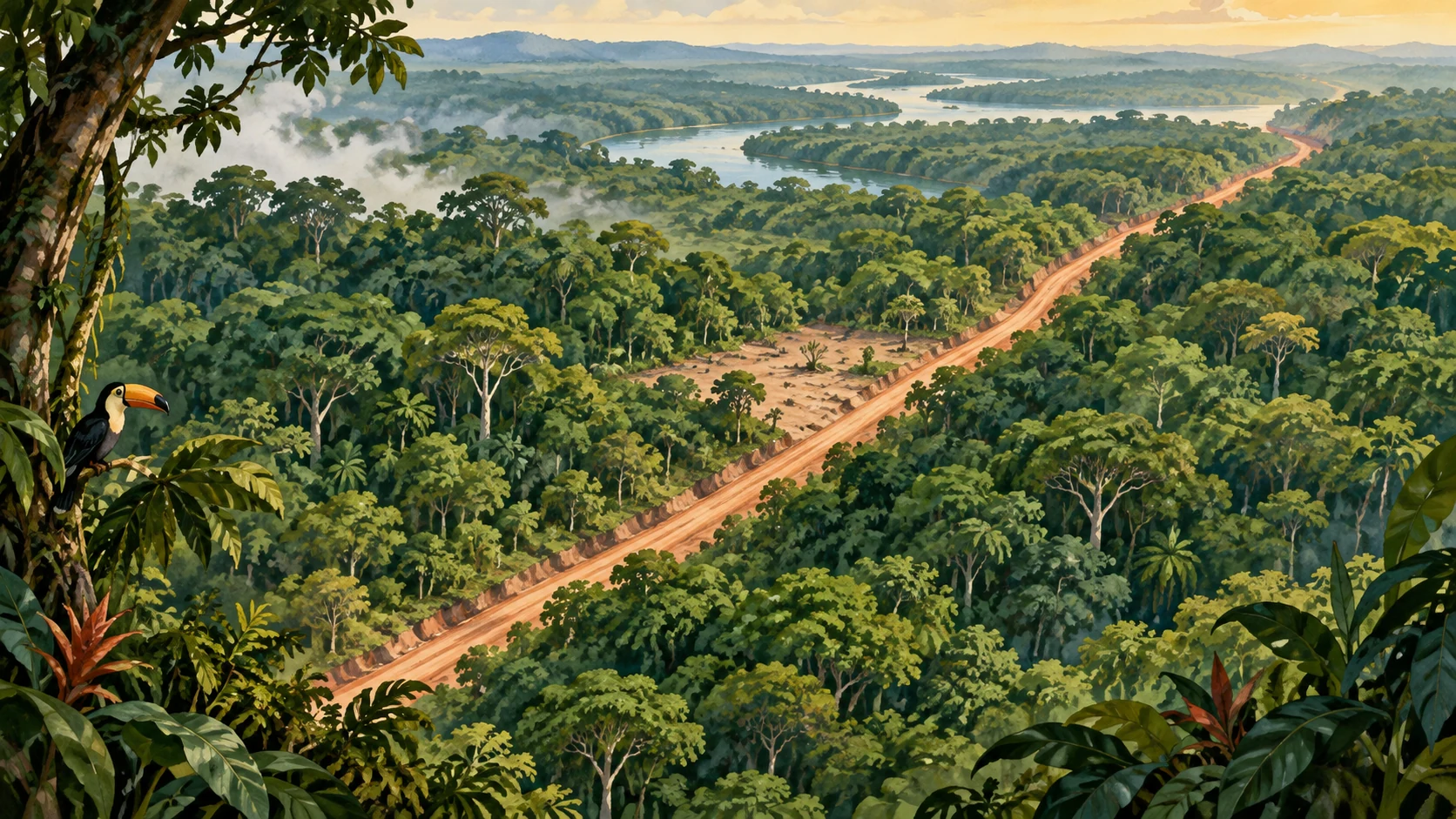
On the ground the wound has a shape. In the Las Piedras watershed in Peru, Junglekeepers names it: new roads cut into the forest, illegal logging, poaching and gold mining.
A road is often the first cut. What follows can be the logging, the hunting and the mining. That is the pattern Junglekeepers describes in this landscape.
Junglekeepers on its mission and the Las Piedras landscape.
There is a future here worth fighting for.
That future is being decided now. Whose rights are respected. Which forests stay connected. Which road gets built, and which one gets stopped. Whether the people guarding the forest can afford to be there next week.
Keeping a forest standing
is daily work.
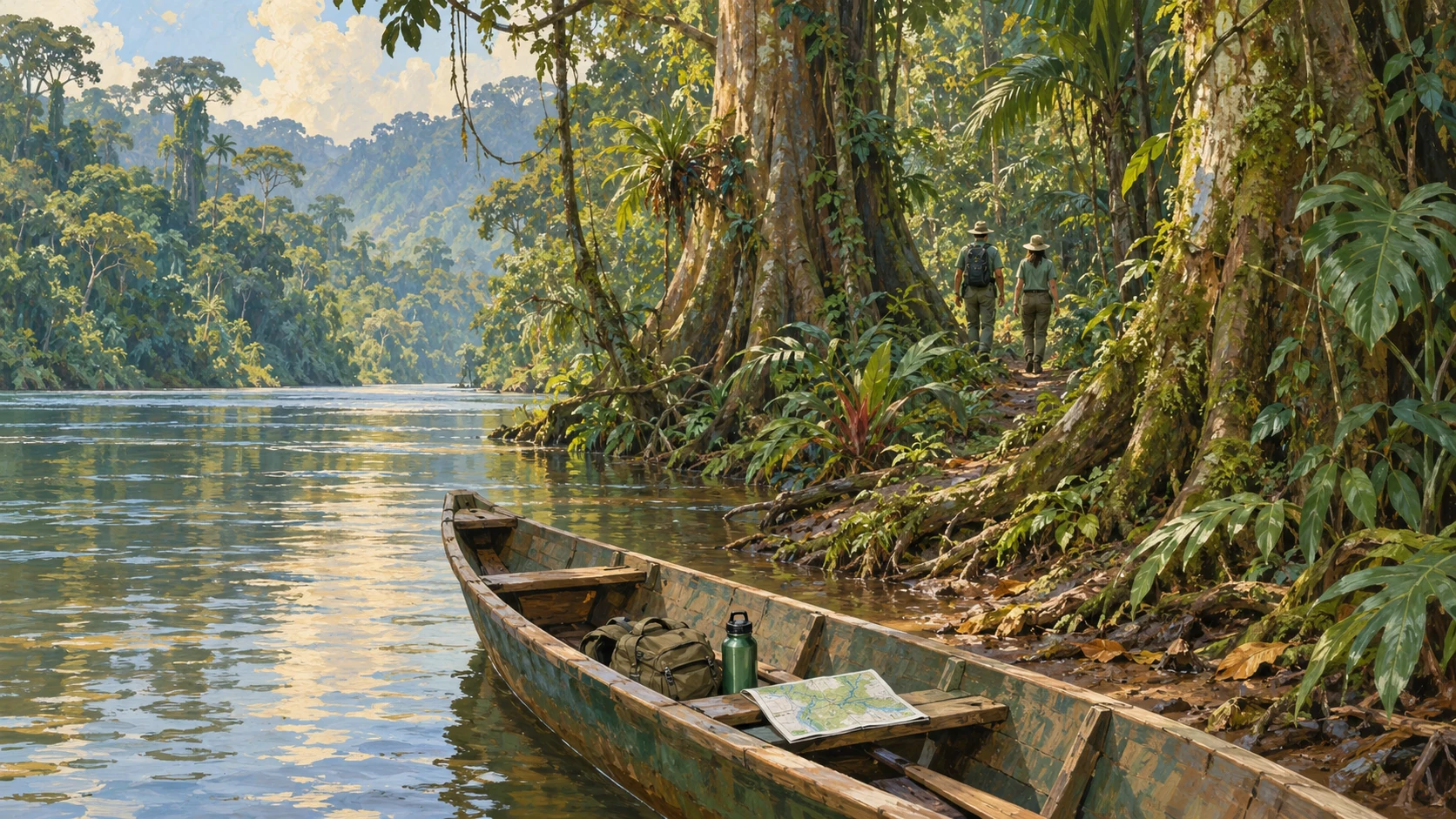
Junglekeepers works in the Madre de Dios region of the Peruvian Amazon, on the Las Piedras River. Its rangers walk the forest. Its aim is one uninterrupted protected area along the river, so the living forest stays connected instead of breaking into separate patches.
Wildlife can keep moving where that habitat stays connected.
Protection is not a mood. It is ranger pay, food, boat fuel, trails, radios and reports. Every month. For years. The forest stays standing when the people guarding it can come back tomorrow.
The mission and the ranger program, from Junglekeepers.
This is the work Devil Torn will pay into. The forest in the game is made up. The rangers are not.